
Types of flowers: identify nine garden favorites and choose what fits
Recognize nine common garden flowers and compare annuals, perennials and bulbs by appearance, bloom season, light and maintenance.
By Gardener Tips
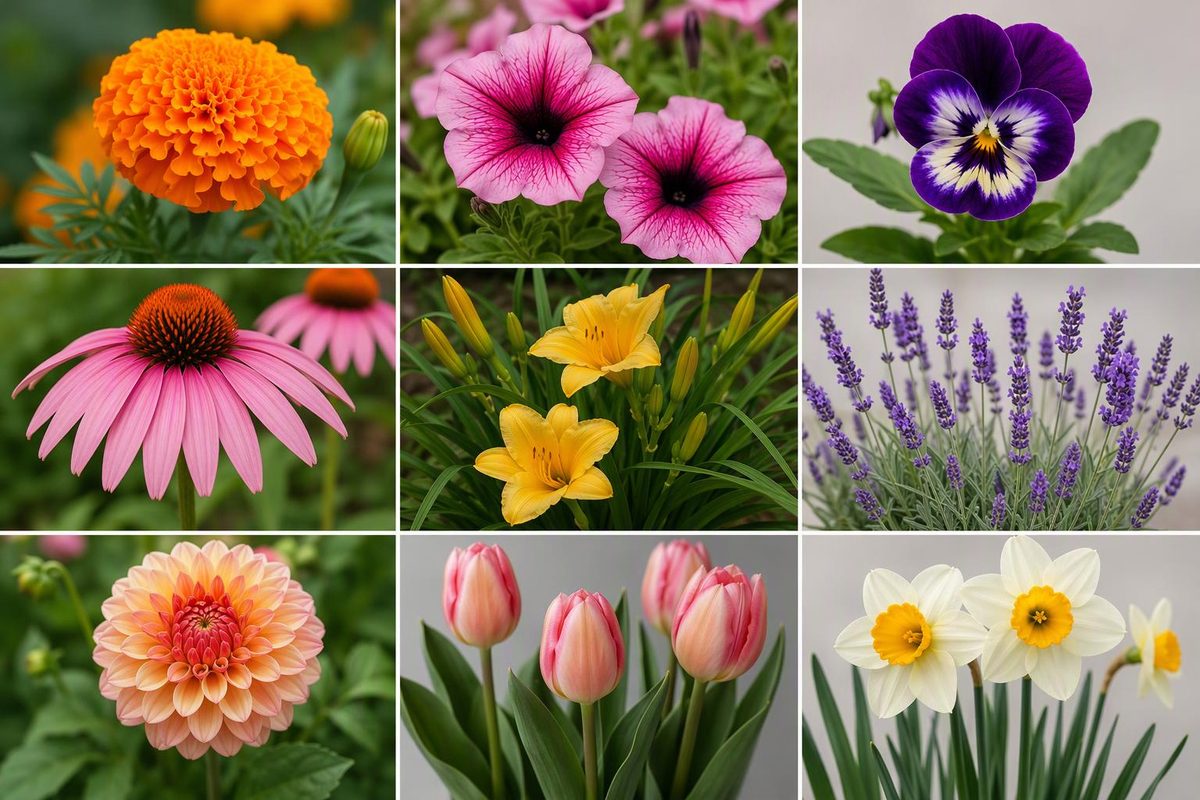
Zinnias and marigolds offer seasonal color; coneflowers and Shasta daisies can return for several years; daffodils and tulips bring spring flowers from bulbs. The useful choice is not just which bloom you like, but which plant fits your light, soil and willingness to replant.
Here are nine common garden flowers, with recognition clues and the conditions that help you choose among them.
What annual, perennial and bulb mean
These nursery labels describe two different things: a plant’s life cycle and its underground storage structure.
- Annuals complete their life cycle in one growing season. Nursery “annuals” also include tender perennials grown for just one season where they cannot survive winter.
- Perennials live for several years. Many herbaceous perennials die back above ground and regrow from surviving crowns or roots. Returning does not mean flowering continuously: many bloom for only a few weeks.
- Bulbs are not a separate life cycle. Many are perennials. Gardening catalogs often group true bulbs with corms, tubers and rhizomes, although these are different structures.
A fourth label, biennial, usually means leafy growth in the first season, followed by flowers, seeds and death in the second. Some cultivars flower in their first year, so check the exact variety rather than relying on the common name. NC State Extension explains these categories and their overlap.
Annuals: choose for seasonal color
Annual bedding plants suit containers, bed edges and gaps between longer-lived plants. They also let you change the planting each year. The trade-off is replacement, along with watering and other care during the season.
| Flower | Recognition clues | Typical bloom season | Where it fits |
|---|---|---|---|
| Zinnia (Zinnia elegans) | Showy, often layered flower heads; rough leaves grow in opposite pairs and clasp the stem. | Summer–fall | Full sun and good drainage. Choose compact cultivars for containers or taller ones for cutting. Allow air circulation, especially in humid conditions. |
| French marigold (Tagetes patula) | Compact, bushy growth; divided leaves; yellow, orange or red flower heads, often ruffled or two-toned. | Spring–fall with spent flowers removed | Full sun to partial shade and well-drained soil. A useful candidate for edging and small containers. |
| Common impatiens (Impatiens walleriana) | Flat-looking, five-petaled flowers with a spur behind them; succulent stems and oval, toothed leaves. Double forms look different. | Late spring–first frost | Part to full shade with moist, well-drained soil. Poor choice for a dry spot; look for downy-mildew-resistant cultivars. |
The seasons in these tables are broad guides for temperate Northern Hemisphere gardens, drawn from the linked US extension profiles—not a local calendar. Climate and cultivar can change both the timing and the length of the display.
Perennials: choose for a returning planting
Build a perennial bed around plants suited to the site, then combine different bloom seasons rather than expecting every plant to flower all summer.
| Flower | Recognition clues | Typical bloom season | Where it fits |
|---|---|---|---|
| Purple coneflower (Echinacea purpurea) | Raised, spiny brown-purple center surrounded by pink-purple rays, often drooping; rough leaves. Cultivars vary in color and form. | Summer | Full sun to partial shade and good drainage. Tolerates drought once established; flowers attract pollinators and seed heads feed birds. |
| Shasta daisy (Leucanthemum × superbum) | Usually white rays around a yellow center; dark green, toothed leaves and upright clumps. | Mainly summer | Full sun to partial shade. Avoid winter-wet soil; expect occasional division to prevent overcrowding. |
| Hybrid astilbe (Astilbe × arendsii) | Feathery plumes of tiny flowers above fern-like, divided foliage; colors include white, pink, red and purple. | A variety-dependent period between late spring and fall | A candidate for moist shade with rich, well-drained soil. Foliage can decline in heat or drought if the soil dries out. |
Bulbs and tuberous plants: choose for a seasonal display
Check whether the plant can remain outdoors locally and whether you have room for its foliage after flowering.
| Flower | Recognition clues | Typical bloom season | Where it fits |
|---|---|---|---|
| Daffodil (Narcissus) | A projecting cup or trumpet surrounded by six petal-like parts; narrow, strap-shaped leaves. Double and split-cup forms vary. | Late winter–spring | Full sun to partial shade with good drainage. Suitable bulbs can stay undisturbed for years; leave foliage until it begins to yellow. |
| Tulip (Tulipa) | Usually an upright cup-shaped flower with six petal-like parts; broad, waxy leaves clasp the stem. | Spring | Full sun and well-drained soil. Repeat flowering is not assured: many hybrids lose performance after the first year, while species tulips often return more reliably. |
| Dahlia (Dahlia) | Flower heads range from open daisy-like forms to densely layered balls or large doubles; opposite, often divided, toothed leaves. | Summer–fall | Sun and fertile, moist but well-drained soil. This is a tuberous-rooted perennial, not a true bulb; tall forms may need stakes. Where winters are too cold for the roots to survive, lift and store them if you want to keep the plant. |
Narrow the choice before buying
- Match the light first. Full sun generally means at least six hours of direct sunlight daily. Start with zinnias for a sunny site, or common impatiens and astilbe for shade—but check moisture needs too.
- Decide what should return. Choose annuals for a changeable seasonal display, suitable perennials for a lasting bed, and bulbs for distinct flowering periods. You can combine all three.
- Read the cultivar label. Confirm mature height, spread and bloom period. A dwarf and a tall cultivar of the same flower can serve very different spaces.
- Check local suitability. For winter survival and planting timing, use the separate guide to hardiness zones versus frost dates. Neither label replaces checking light, drainage and summer conditions.
Use the recognition clues to narrow a name, not to prove an identification from flower color alone. Compare leaves and the whole plant with the linked profiles. If the features do not match, confirm the identification before buying more of it—and do not assume an ornamental flower is edible.