
Four backyard planting layouts for sun, shade and manageable upkeep
Choose a backyard layout for sun, shade, moisture and maintenance, with practical planting arrangements and source-linked checks before buying.
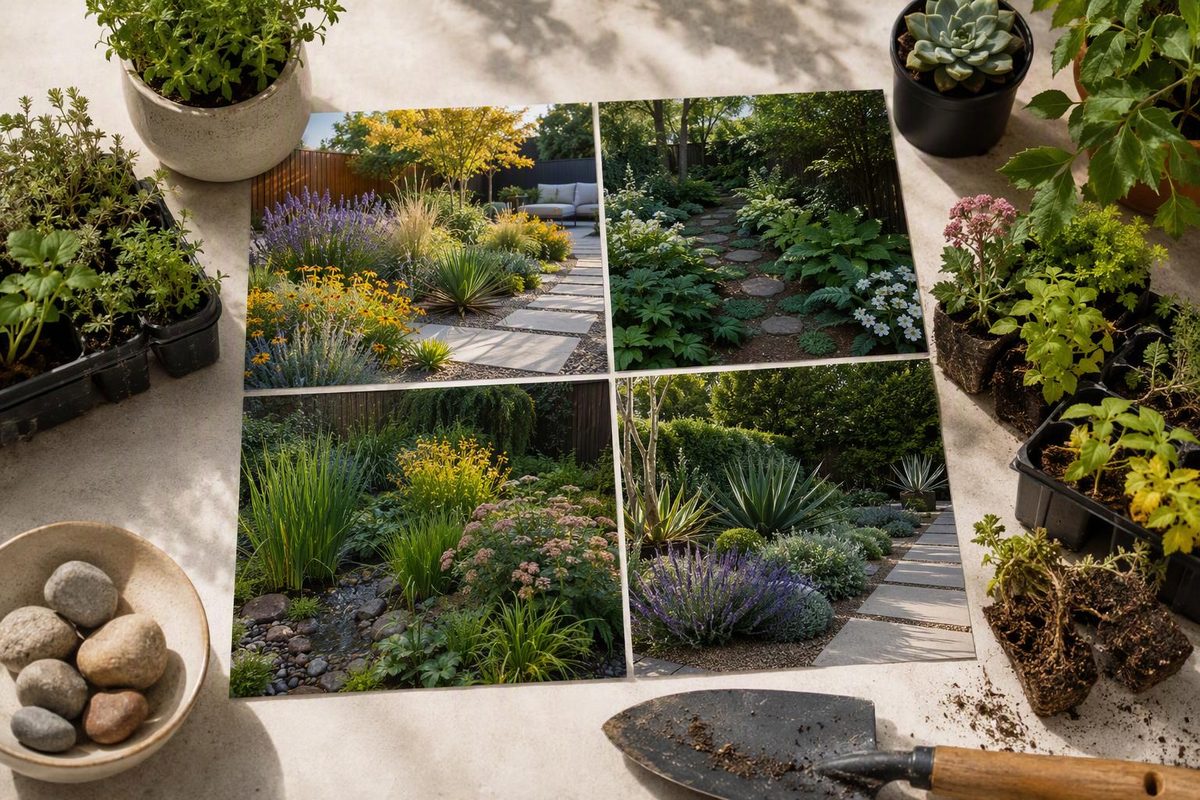
By Gardener Tips
Start with the part of your backyard you want to use, then arrange planting around its light and moisture conditions. A sunny flower border, a dry garden and a woodland edge can share the same yard—but they should not automatically share the same plants or watering schedule.
These four layouts are design suggestions, not universal planting recipes. Choose the closest fit, then select species suited to your region and the conditions in each bed.
Map the yard before choosing a layout
On a simple sketch, mark existing trees, places you walk or play, views you want to keep, and these three planting signals:
- Growing-season light. Record direct sun at several times of day, with deciduous trees in leaf. Full sun generally means at least six hours of direct summer sunlight, according to University of Maryland Extension.
- Moisture and drainage. Note which areas dry quickly and which remain damp after rain. Shade does not necessarily mean moist soil: tree roots compete for water, and dense canopies can intercept rain.
- Maintenance capacity. Decide how much watering, weeding, pruning and seasonal replacement you are willing to do. Keep the first planting area small enough to maintain.
This puts use and site conditions ahead of a shopping list, following the approach in Colorado State University’s landscape-design guidance.
1. Sunny, dry backyard: a low-water perimeter border
Best fit: An exposed yard with well-drained soil, especially where summers are dry or irrigation is limited.
Suggested arrangement, from boundary to open space:
Spaced shrubs → repeated groups of drought-adapted perennials and grasses → low-growing edge plants
Put taller plants where they frame a view or provide screening rather than scattering them through the middle. Repeat a few perennial groups along the border, leaving room for each plant’s mature spread. Keep the center open if you need it for play or circulation.
Choose plants with similar water needs for this whole bed. If you want to retain a thirstier favorite, put it in a separate, conveniently watered planting area rather than mixing it into the dry border. This grouping is called hydrozoning; CSU Extension advises against combining plants with different water needs in one irrigation zone.
Climate adjustment: Use locally appropriate drought-adapted species, not a plant list copied from another climate. Match drainage requirements as well as heat and winter tolerance.
Maintenance trade-off: Low-water does not mean no-water at planting time. New drought-tolerant plants still need establishment watering and weed control. If you remove lawn around an existing tree, plan how that tree will continue receiving water; abruptly withdrawing its former irrigation can stress or kill it, CSU warns.
2. Sunny backyard with reliable moisture: a layered flower border
Best fit: A sunny bed where soil drains but does not routinely become very dry, and you are willing to do some seasonal upkeep.
Suggested arrangement beside a fence:
Tall structural plants at the back → flowering perennial groups in the middle → low foliage or groundcovers at the front
For a bed viewed from every side, move the tallest plants toward the center instead. Keep shorter plants beside the lawn or walking route so they do not obscure the rest of the planting.
As a starting palette, choose one structural shrub or grass, several perennials with different flowering seasons, and a low-growing plant that remains attractive between blooms. Repeat groups rather than buying one of everything. Put any annual-color pocket near a place you already pass, where watering and replacement are convenient.
Climate adjustment: In regions with summer drought, this layout may need supplemental water; in wetter regions, select for drainage and humidity tolerance. Do not assume a flowering perennial bed uses less water than lawn—CSU notes that some perennial favorites use as much or more.
Maintenance trade-off: Ask whether each candidate needs staking, deadheading, division or containment. A long flowering season is not the same as low upkeep. If the site stays wet, select wet-soil-tolerant plants rather than treating it as an ordinary moist border.
3. Shady backyard: a woodland edge around existing trees
Best fit: A tree-shaded yard where lawn struggles or you want a quieter, foliage-led planting.
Suggested arrangement:
Existing canopy → occasional understory shrubs where space allows → mixed low perennials and groundcovers
Preserve the trees as the main structure. Add shrubs only where their mature size fits, then use lower plants to connect the planting visually. Leave a clear route through the garden instead of expecting the groundcover to serve as a walking surface.
Separate dry shade from reliably moist shade before choosing plants. Maryland Extension’s shade-garden guidance explains that moisture-loving woodland species may require irrigation in a dry home garden. It also distinguishes deep building shade from filtered tree shade and warns that hot afternoon sun can be hard on woodland plants.
Climate adjustment: Choose woodland or forest-edge species native or otherwise appropriate to your region. A lush stream-valley planting is not a reliable model for a dry spot beneath a large tree.
Maintenance trade-off: Small plugs can be easier to fit among established roots with less root cutting, according to Maryland Extension’s groundcover guidance. Do not force planting holes through substantial roots. Compatible woodland plants can grow among fallen leaves, but uncover evergreen foliage that becomes buried.
4. Mixed sun and shade: an open center with distinct planting zones
Best fit: A family backyard with several exposures, or a gardener who wants to improve the yard in stages.
Keep one continuous open area for activities. Around it, place a sunny border on the bright side and a separate shade planting beneath trees or beside buildings. Put higher-attention plants near the house or an existing seating area; use simpler shrub-and-groundcover combinations farther away.
The visual connection can come from repeated bed shapes or similar foliage textures. It does not require forcing the same species into sunny and shady locations.
Maintenance trade-off: Replace awkward, unused lawn corners first, not the whole yard at once. CSU recommends phased conversions so you can learn which plants perform well and how much maintenance the new beds require. Groundcovers still need weed removal during establishment, and vigorous spreaders may create containment work later.
Turn the layout into a planting plan
Before buying, draw each proposed shrub or large perennial at its mature width, not its nursery-pot size. A hypothetical four-foot-wide shrub occupies about two feet on either side of its center; leave additional clearance wherever you need access. UF/IFAS Extension stresses checking mature size to avoid plants that need excessive pruning to fit.
Then check each candidate for:
- Suitability for the bed’s light, moisture, soil and local summer conditions.
- Winter survival; use hardiness zones and frost dates for their different purposes, not as substitutes for a site assessment.
- Mature spread, spreading behavior and local invasive status.
- Establishment watering and recurring maintenance you can actually provide.
If the plan requires cutting major tree roots, changing drainage or stabilizing an eroding slope, pause for site-specific advice. For a straightforward border, mark out one manageable bed and confirm that its mature plants leave the open space and access you intended.