
Fiddle-leaf fig care: check the pot before treating the leaves
Care for an indoor fiddle-leaf fig with a soil-led watering routine, sensible light placement and checks for brown leaves, yellowing and leaf drop.
By Gardener Tips Editorial
For an indoor fiddle-leaf fig, the useful first decision is not which treatment to buy: it is whether the plant needs water, better drainage or a different position. Check the potting mix before reacting to a drooping or falling leaf. Too much and too little water can both cause leaf drop.
This guide covers fiddle-leaf fig (Ficus lyrata), the houseplant with large, violin-shaped leaves—not the edible garden fig. It rarely flowers or fruits indoors, according to NC State Extension, which also notes the watering-related leaf drop.
Choose a bright, stable position
Place the plant near a bright window where the leaves receive filtered daylight, with protection from strong afternoon sun. Bright indirect light does not mean a dim corner across the room: the light must reach the foliage. Both Missouri Botanical Garden and NC State Extension recommend bright indirect light or partial shade and protection from afternoon sun.
If you need to increase light, do it gradually rather than moving the plant straight into intense direct sun. Abrupt increases can bleach or burn houseplant leaves, according to University of Missouri Extension.
Keep it away from heating and cooling vents, and check for cold conditions beside windows at night. NC State recommends temperatures above 55°F (about 13°C) and notes that temperature fluctuations around vents can cause brown spots. That lower threshold is not a target room temperature; a comfortably warm, stable position is the better starting point.
Water by soil condition, not by the week
Fiddle-leaf figs prefer moist, well-drained growing media but are sensitive to overwatering. Aim to avoid both a constantly saturated root ball and prolonged, complete drying.
Use this routine:
- Check below the surface. Feel the potting mix to about two inches deep. If it is still moist there, wait and check again. If it feels dry, watering is likely needed. This is a general houseplant check, not a precise moisture threshold for every pot.
- Water thoroughly when needed. Apply water to the mix until it drains freely from the bottom, rather than giving repeated small sips.
- Empty the saucer or decorative outer pot. Do not leave the growing pot standing in runoff.
- Recheck before the next watering. Light, temperature, humidity, pot size and growing medium all affect how quickly it dries.
These checking and drainage methods come from University of Maryland Extension’s watering guidance. Use a pot with drainage holes and a well-draining houseplant mix; an attractive outer pot must not become a hidden reservoir.
When growth and daylight decline, the plant may need water less often. Missouri Botanical Garden advises reducing watering from fall through late winter. Let actual drying guide that adjustment rather than imposing a seasonal timetable.
Read stress signals alongside the conditions
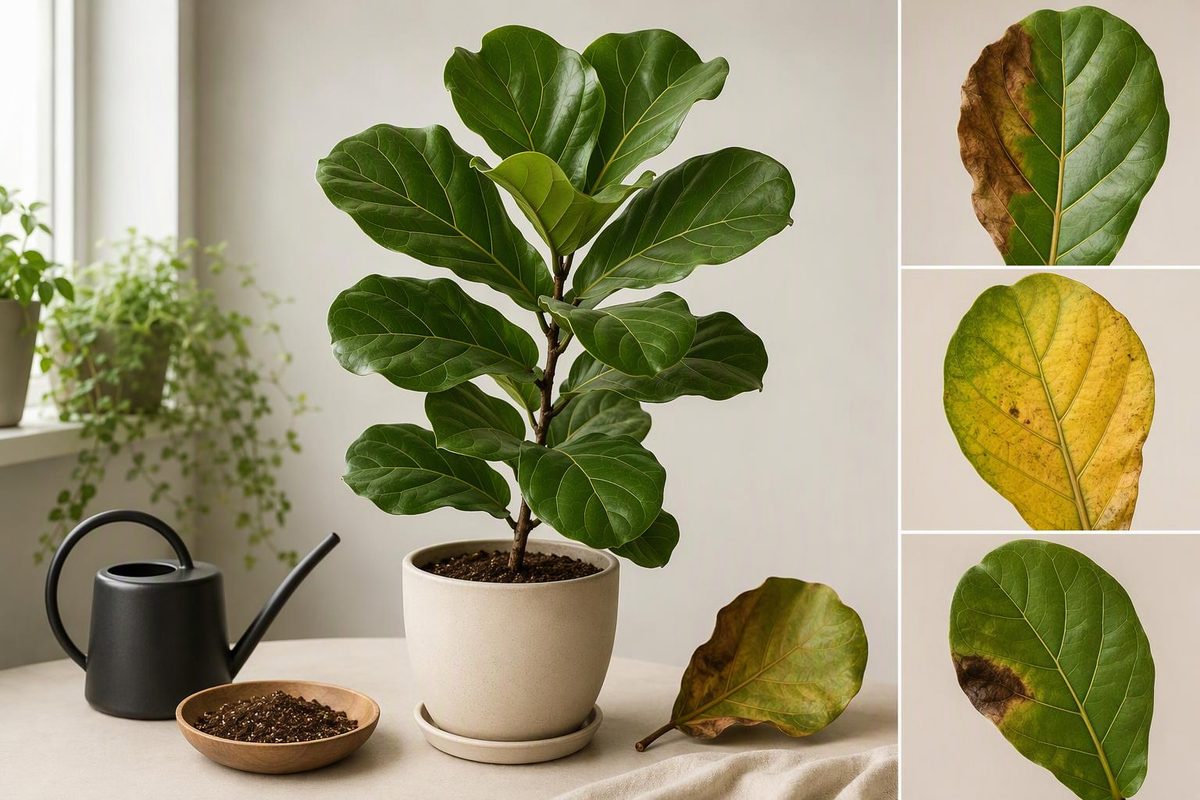
A leaf symptom is a clue, not a diagnosis. Fiddle-leaf figs can develop scorch, temperature-related spotting, watering-related leaf drop, and bacterial or fungal problems. NC State Extension identifies these possibilities. The checks below also draw on University of Missouri Extension’s general houseplant diagnostic guidance, which cautions that several unfavorable conditions may act together. These are starting points, not species-specific diagnoses from leaf appearance alone.
| What you observe | What to check | Sensible first response |
|---|---|---|
| Drooping or falling leaves | Is the mix dry below the surface, still wet, or sitting in runoff? | Water if dry; if wet, empty trapped water and check drainage before adding more. |
| Yellowing and leaf drop with persistently wet mix | Drainage holes, standing water and compacted growing medium | Correct drainage and reassess watering. Do not assume a fertilizer shortage. |
| Brown tips or margins | Recent drying, excess fertilizer, cold exposure or hot airflow | Correct the evident stress rather than treating brown edges as proof of one cause. |
| Bleached or scorched patches after a move | A sudden increase in direct sunlight | Filter the strong sun and make further light changes gradually. |
| Brown spots despite reasonable watering | Vents, temperature swings and possible disease | Stabilize conditions; seek diagnosis if spots continue spreading. |
Inspect the undersides of leaves and stems as well. Scale, aphids, mealybugs, thrips and spider mites are pests worth monitoring on this species, according to NC State Extension. If insects are present, identify them before choosing a treatment.
As a practical monitoring step, photograph affected leaves and note watering dates and any recent move. If spotting spreads, leaf loss continues, or the plant wilts while the mix remains wet, stop adding water or fertilizer as a reflex. Ask a local extension service or plant diagnostic clinic for help, supplying photos of the whole plant, affected leaves and pot setup.
Fertilize and repot for a reason
Feed a plant that is actively producing healthy growth, following the houseplant fertilizer label. Do not use extra fertilizer to compensate for poor light, wet roots or wilting. University of Missouri Extension warns that fertilizer under poor growing conditions can cause further injury.
Repot when roots have outgrown the container—not automatically because a newly purchased plant loses a leaf. The same guidance notes that immediate repotting adds strain while a new houseplant is adjusting to its surroundings. Poorly draining growing medium is another reason to consider repotting, according to University of Maryland Extension.
Household safety: Keep the plant out of reach of children and pets that might chew it. NC State lists Ficus lyrata as toxic if ingested and notes that its milky sap can irritate skin; wear gloves when pruning. If ingestion is suspected, contact a poison service for a person or a veterinarian for a pet rather than relying on plant-care advice.