
Christmas cactus care: what to change when it won’t flower
Keep an established Christmas cactus healthy, check why it missed flowering, and use cool temperatures and uninterrupted nights to encourage buds.
By Gardener Tips
A healthy Christmas cactus that grows stems but produces no flowers usually needs a change in night length and temperature, not a bigger pot or extra fertilizer. If buds formed and then fell off, check watering and sudden changes in conditions instead. Clemson Cooperative Extension identifies these as different flowering problems with different remedies.
First, check which holiday cactus you have
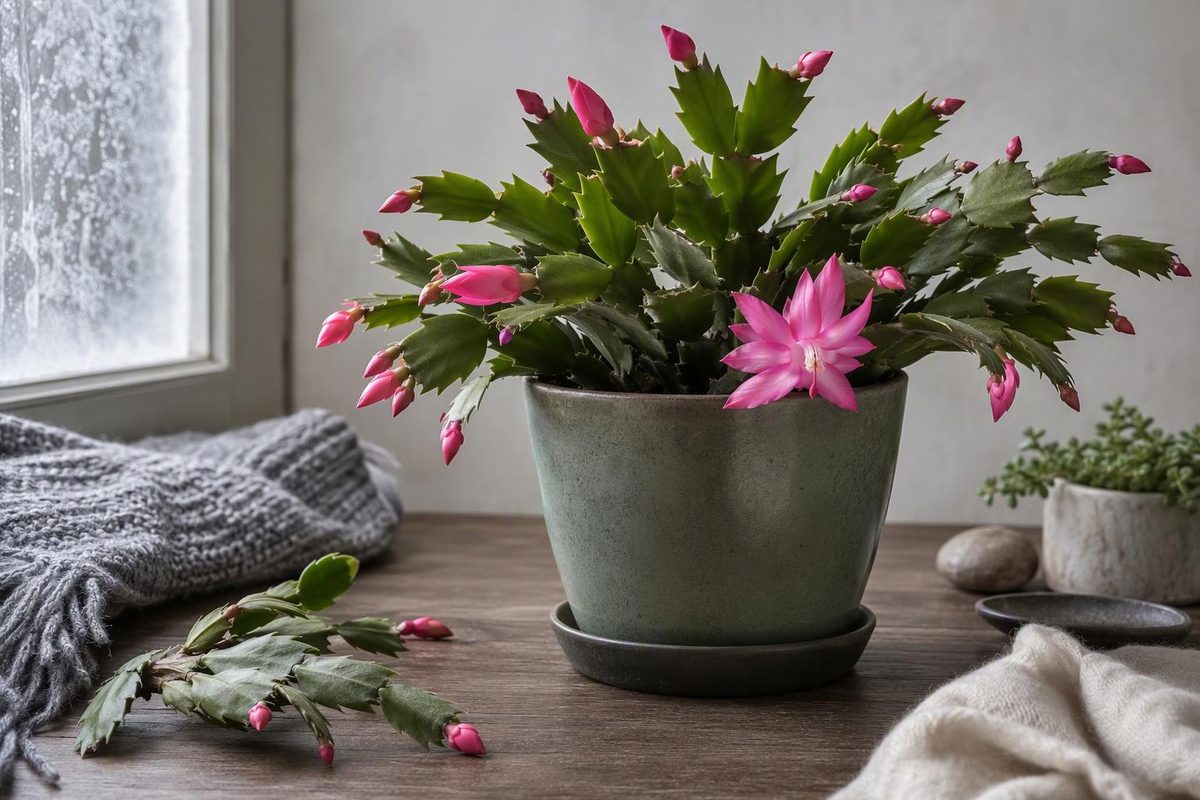
Look at the edges of the flat, leaf-like stem segments:
- Pointed teeth: usually Thanksgiving cactus, Schlumbergera truncata.
- Rounded, scalloped edges: characteristic of Christmas cactus, Schlumbergera × buckleyi.
Many plants sold as “Christmas cactus” are Thanksgiving cacti or hybrids with intermediate features. Their flowering dates differ, so a plant blooming before Christmas is not necessarily mistimed or poorly cared for. Both types can use the care and flowering routine below. Easter cactus, which typically flowers in spring, has different flowering requirements; this routine is not intended for it. Iowa State University Extension explains the distinctions and the overlap among hybrids.
Everyday care for an established plant
These are forest cacti, not desert cacti. They need bright, indirect light and regular water without a soggy root zone.
- Light: Choose a bright position out of strong direct sun. An east-facing window is often suitable; avoid hot midday sun through glass.
- Water: Check the potting mix rather than watering on a fixed weekly schedule. Water when the surface begins to dry, let excess escape through the pot’s drainage holes, and empty the saucer or decorative outer pot. Do not let the whole root ball stay bone-dry.
- When budding or flowering: Keep the mix evenly moist, but not waterlogged. Excessive drying can cause buds to fall.
- Feed: Use a liquid houseplant fertilizer during active spring and summer growth, following its label. Stop feeding in late summer as you prepare for bud formation.
- Repot: A snug pot is normal. Repot when roots have filled the container, using a free-draining mix and a pot only slightly larger. Spring, after flowering, is a better time than the budding period.
These recommendations follow the RHS growing guide and Clemson’s care guidance. An established plant does not need repotting simply because it missed one flowering season.
No buds? Give it cool, uninterrupted nights
Shorter days and cooler temperatures signal flower-bud formation. A bright living room used late into the evening may provide good daytime light but the wrong night conditions.
For a healthy plant without buds, try this routine in the run-up to its usual autumn or winter flowering season:
- Choose a suitable spot. Give it bright, indirect light by day and nights around 60–65°F (16–18°C). Keep it away from radiators and cold drafts.
- Provide 14–16 hours of uninterrupted darkness each night for at least six weeks. For example, 6 p.m. to 8 a.m. gives 14 hours if the plant receives no light during that interval. An unused room can be simpler than moving it daily.
- Check for nighttime light. Room lamps, kitchen lights and nearby outdoor lighting can interfere. “Near a window” does not necessarily mean dark after sunset.
- Reduce watering modestly before buds appear. Let the top few centimetres of mix dry between waterings, but do not deliberately wilt the plant or dry the root ball completely.
- Once buds develop, keep care steady. Maintain even moisture and avoid abrupt changes in temperature or location. Iowa State advises waiting until the first flowers open before moving the plant for display.
Clemson recommends at least six continuous weeks of long nights, while Iowa State notes that darkness requirements vary among cultivars. Some plants respond to shorter nights or sufficiently cool temperatures alone. The combined routine is a practical approach, not a guarantee of flowers on Christmas Day.
Buds fell off—or the stems look unwell
Buds formed, then dropped: The plant received a flowering signal, so first investigate stress during bud development. Check for a drying root ball, standing water, drafts, heat or a recent move. Correct the unstable condition rather than restarting the darkness routine. Iowa State’s troubleshooting guidance emphasizes consistent care during this stage.
Stems are wrinkled or limp: Do not assume the plant simply needs more water. The RHS lists both under- and overwatering, root deterioration, heat and direct sun as possible causes. Feel the mix and check drainage before acting. If the pot is already wet, adding more water is not a sensible first response. Persistent decline warrants a root check and advice from a local extension service or plant clinic; appearance alone cannot establish the cause. RHS problem guidance
Flowers arrive late: Warm autumn conditions can delay flowering. Keep conditions stable rather than trying to force the calendar. RHS flowering guidance
After flowering, give the plant a cooler period with less frequent watering, without letting it dry out completely. Resume regular watering and feeding as spring growth begins. If you want a bushier plant, remove a few tip segments in spring—not during bud development—to encourage branching and eventually more flowering tips. RHS seasonal care guidance