
How to care for established peonies through the seasons
When to support, water, deadhead and cut back established peonies—and what to check when a mature plant stops flowering.
By Gardener Tips
For established peonies, the main jobs are straightforward: support heavy flowers before they flop, water during dry spells, and keep healthy foliage after flowering. If a mature plant stops blooming, check its conditions before digging it up or adding more fertilizer.
This guide focuses on herbaceous garden peonies, whose stems die back each winter. Tree peonies keep a woody framework: do not apply the ground-level autumn cutback below to them. Itoh, or intersectional, peonies also need seasonal foliage cleanup. University of Minnesota Extension explains the distinction.
As shoots emerge: put supports in place
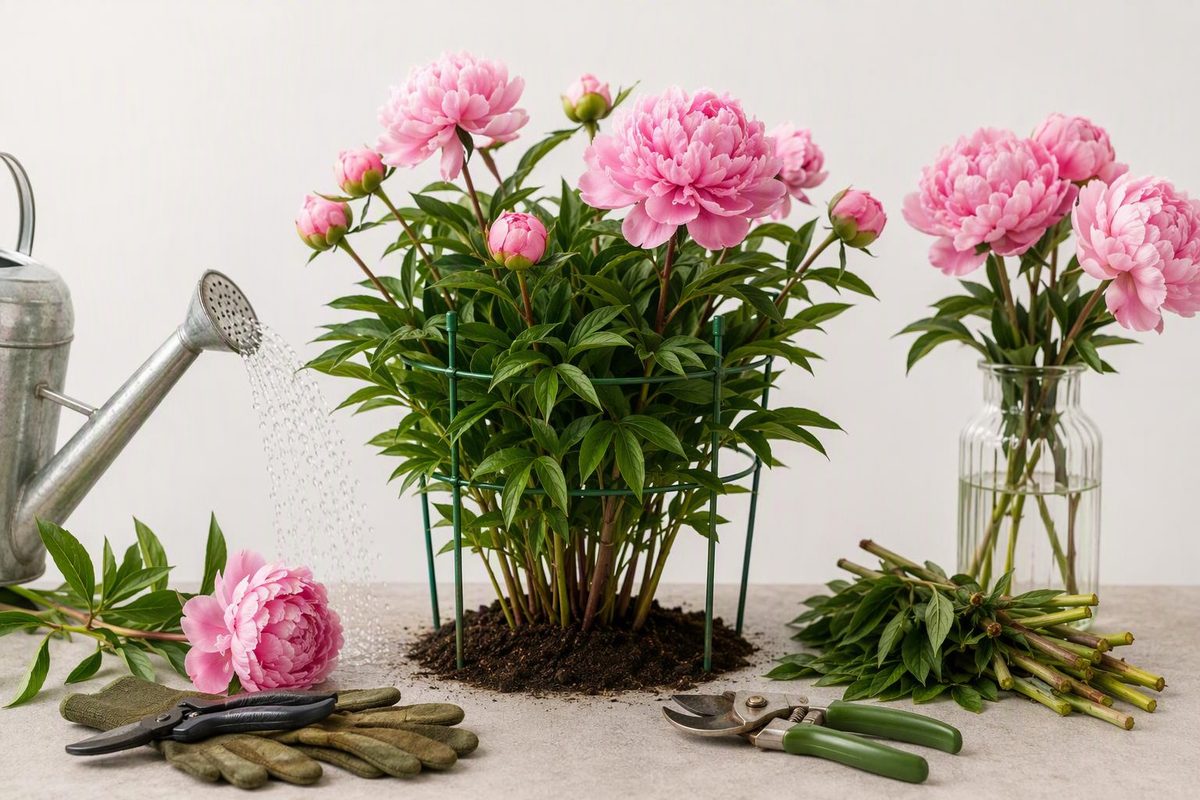
If your peony has heavy double flowers or has flopped in previous years, place a peony ring or metal hoop over the clump in early spring, while shoots are still short. Let the stems grow through it rather than trying to gather a fully grown plant into a small ring.
Not every peony needs support. Single-flowered and Japanese forms have lighter flowers and are less likely to flop. Iowa State Extension recommends early-spring supports particularly for double-flowered varieties.
Also check whether nearby trees or shrubs now shade the plant. An established peony may be in the same place, but its light conditions can change. For herbaceous garden peonies, Iowa State recommends at least six hours of direct sunlight daily for best flowering.
Avoid treating weak flowering as an automatic request for fertilizer: excessive nitrogen can encourage leaves at the expense of flowers. Both light and overfeeding are worth checking first. Iowa State’s flowering guide explains these causes.
During bud growth and flowering: water for dry soil, not a fixed day
Older peonies become more drought tolerant, but that does not mean they never need water. Dry conditions during bud formation and flowering can prevent buds from enlarging and opening. Wisconsin Extension describes improving drought tolerance with age, while Iowa State identifies bud growth and flowering as important watering stages.
Use these checks rather than a universal weekly schedule:
- Dry weather and drying soil: water thoroughly. Iowa State recommends soaking the soil to a depth of about 12 inches (30 cm), rather than giving a light surface sprinkle.
- Soil still wet or water pooling: do not add more water. Peonies need drainage; persistent wetness can lead to root rot.
- A prolonged dry spell after flowering: keep checking the plant and soil. Severe summer drought can weaken peonies and reduce the following season’s flowers.
Rainfall, soil and exposure determine how often watering is needed. The target is a well-watered root zone during dry periods—not permanently wet soil. These watering and drainage limits are described in Iowa State’s care guide and flowering troubleshooting guide.
After flowering: deadhead, but keep the leaves
Remove spent flower heads to tidy the plant and prevent fruit formation. Leave healthy foliage and stems standing: they help the plant build reserves for the next season. Cutting the whole clump down in summer can weaken it and reduce future flowering. Iowa State explains deadheading and the consequences of premature foliage removal.
Ants on buds are not a reason to intervene. They are attracted to nectar, do not threaten plant health, and are not required for the flowers to open. Wisconsin Extension addresses this common misconception.
If flowers are missing: separate absent buds from failed buds
The symptom helps narrow the next step:
| What you see | What to check |
|---|---|
| Plenty of leaves, few or no flower buds | Increasing shade, excessive nitrogen, or a crown planted too deeply. Iowa State recommends placing herbaceous peony eyes—the growth buds on the crown—1–2 inches (2.5–5 cm) below the soil surface. |
| Poor flowering after moving or dividing | Allow recovery time. Plants can take two or three years to re-establish enough to flower well. |
| Buds form but fail to open | Consider dry conditions during development, a late hard freeze, or fungal disease—especially in cool, wet weather. |
| Fewer flowers after an early summer cutback | Keep healthy foliage through the growing season this year. |
These are possible causes, not diagnoses from appearance alone. Iowa State’s troubleshooting guide distinguishes them. If buds repeatedly die or stems wilt, seek a diagnosis from a local extension service or plant clinic before choosing a treatment.
Do not divide a mature peony simply because it is old. Healthy plants do not require routine division. If a confirmed shade or depth problem requires moving a herbaceous peony, plan for autumn rather than disturbing it during active spring growth. Exact timing is local: Minnesota Extension recommends September for its climate. Its division guide explains when disturbance is justified.
At autumn dieback: clean up herbaceous peonies
After a hard autumn freeze, cut dead herbaceous foliage to ground level and remove the debris from the bed. This helps control leaf blotch and other fungal diseases. Iowa State recommends this autumn cleanup; Minnesota Extension advises against composting peony foliage.
Use actual dieback and local weather, not a calendar date alone. Keep the woody stems of tree peonies intact.