
Thistle in the garden: identify it before you keep or remove it
Use stems, leaves and spreading habits to identify common garden thistles, decide which to retain, and match control to roots or seeds.
By Gardener Tips
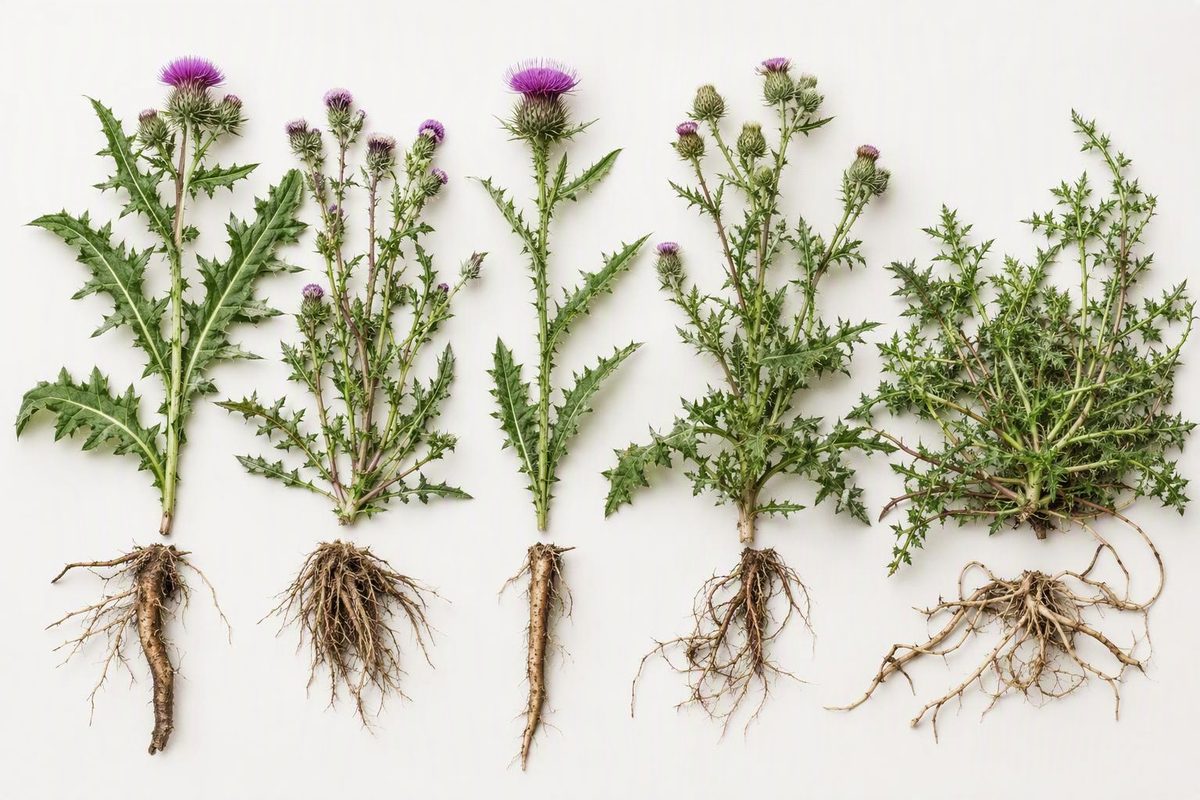
A thistle is not automatically a weed to remove—or a wildlife plant to keep. Identify the species, check its status where you live, then match your response to how it spreads. A taprooted bull thistle needs a different approach from a creeping patch of Canada thistle.
The examples below use North American identification sources. Native and invasive status are regional, not properties of the common name alone.
Read the stem, not just the flower
Purple flowers and prickly leaves are not enough for a reliable identification. Photograph the whole plant, the stem below a leaf, both leaf surfaces, and the leafy scales around the flower head. These scales are called bracts. Also note whether you have one plant or a patch producing new shoots.
| What you see | Possible identification | Why it matters |
|---|---|---|
| Numerous small purple flower heads; prickly leaf edges but stems generally without spines; an expanding patch | Canada or creeping thistle (Cirsium arvense) | A perennial that spreads through far-reaching horizontal roots as well as seed. Tiny root fragments can regrow. |
| Larger purple flower heads with sharply spine-tipped bracts; spiny, flat “wings” running down the stem | Bull thistle (Cirsium vulgare) | Usually a two-year plant with a taproot. It reproduces by seed, rather than spreading roots. |
| Dark green leaves with conspicuous white marbling; large purple heads surrounded by stout, jagged spines | Milk thistle (Silybum marianum) | A distinct species—not another name for Canada thistle. Check its local weed status before retaining it. |
| Yellow, dandelion-like flowers and milky sap | Possibly a sowthistle, rather than Canada thistle | Do not apply a Canada-thistle diagnosis or control plan based on prickly leaves alone. |
The Canada-thistle and sowthistle clues come from University of Minnesota Extension. The bull- and milk-thistle features are described in the Clackamas Soil and Water Conservation District’s identification guide; Oregon State University Extension confirms bull thistle’s seed-only reproduction.
These are screening clues, not a complete identification key. Native thistles vary, and a spineless stem does not by itself prove that a plant is native. If the features do not line up, seek identification from a local extension service, botanical garden or conservation authority before digging or spraying. Send the photographs and your location.
When keeping a thistle makes sense
Native thistles can provide valuable nectar, pollen and food for wildlife. The Xerces Society’s native-thistle guide explains their ecological value and provides regional identification resources. Removing every prickly plant can mean losing a useful native wildflower.
Consider retaining a positively identified, locally native thistle when:
- Its mature size fits the bed or wildlife area.
- Its spines will not obstruct paths, play areas or routine garden work.
- You can monitor seedlings and keep its spread within the space you have chosen.
- No local control requirement applies.
Check your local authority’s current noxious-weed list before keeping an introduced thistle. Flowers attracting insects are not, on their own, a reason to retain a spreading weed. In North America, Canada thistle and bull thistle are introduced species; native thistles are separate plants, not simply less vigorous versions of them.
If you control it, target the right problem
Wear thick protective gloves when handling thistles, as recommended by the National Park Service.
Bull thistle: remove the rosette and prevent seed
Act while the plant is still a low rosette, before it sends up a flowering stalk. Oregon State University recommends grubbing out first-year rosettes 1–2 inches below the soil surface to prevent resprouting. Hand-pulling before flowering can also reduce infestations.
Do not leave cut flower heads lying in the bed: they can still develop viable seed. Bag them to prevent dispersal, then check locally accepted disposal arrangements. These methods are detailed in OSU’s bull-thistle guide.
Canada thistle: plan for repeated root regrowth
For an individual plant or small patch, remove as much root as practical before seed develops, then revisit the area for new shoots. A clean-looking bed after one pulling session is not proof that the root system is gone.
Cutting or mowing before seed formation helps prevent seed spread, but does not stop spread through the roots. Minnesota Extension notes that mowing can take several years to be effective and advises against mowing plants that have gone to seed. Avoid treating a one-off tilling session as a cure: chopping roots leaves fragments capable of producing new plants. Its management guidance supports persistent removal rather than a single clearance.
If the patch keeps expanding, roots run through valued plants, or you cannot remove it without substantial damage, ask local extension or a weed-management service for a site-specific plan. Herbicide advice for turf, forestland or pasture is not automatically suitable for a flower or vegetable bed. If a pesticide is considered, verify that the exact product label permits the intended use and follow its directions. In the United States, the EPA’s label-reading guidance explains why the label comes first; elsewhere, consult your local pesticide regulator as well as the label.